SUPPLY CHAIN: ACTIVE LOW VOLTAGE / INDUSTRIAL AUTOMATION GUANGZHOU · CHINA
BRAND COMPARISON · 01

CHINT vs Schneider Electric — practical low-voltage comparison for buyers

Both brands offer broad low-voltage portfolios, but the right comparison is application-specific — not a "which brand is better" question. This guide compares MCB, MCCB, contactor and overload families by rating, standard and buyer risk, so you know when CHINT is a sensible cost-down and when Schneider should stay.
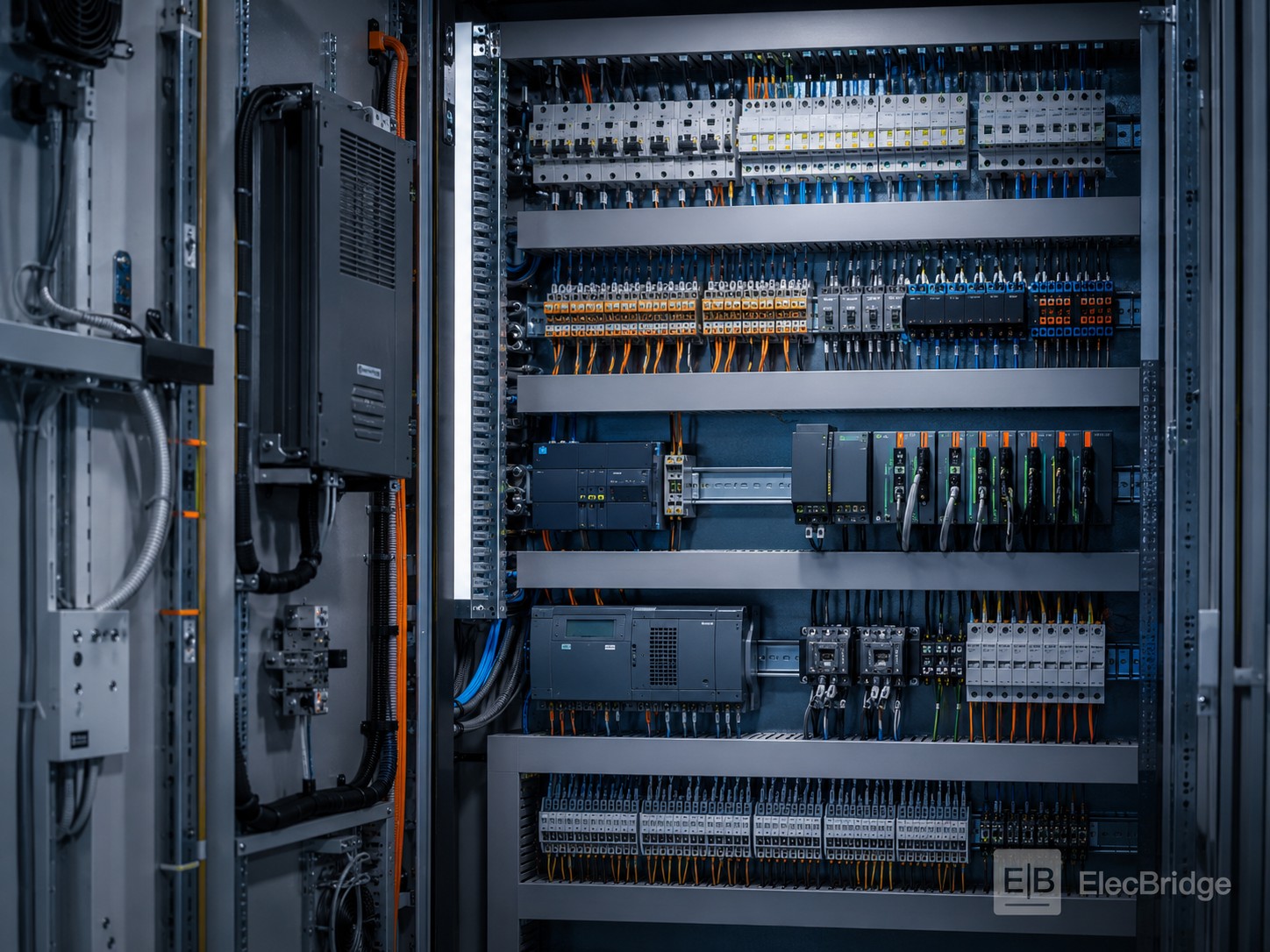
Industrial control panel interior - ElecBridge
Quick Answer

CHINT and Schneider Electric both offer broad low-voltage portfolios, but a sensible buyer-side comparison is application-specific. CHINT can be attractive for cost-sensitive standard distribution and motor-control panels when the project permits the brand and the exact IEC ratings/certifications are verified. Schneider remains the safer choice where the customer specification mandates Schneider, the site is standardized around Acti9 / ComPacT / TeSys, accessory compatibility matters, or the project depends on a globally standardized installed base.

CORE PRINCIPLE

Compare functions and standards — not brand names

What we won't say

Do not write "CHINT is the same as Schneider" or "CHINT is X% cheaper". Compare exact functions, standards, breaking capacity, trip/coordination, accessories, certification and project acceptance.

PRODUCT MAP

Functional product-family map

FunctionCHINT familySchneider familyHow to use the comparison
MCB / final distributionNXB-63Acti9 iC60NStrong functional overlap; not a one-to-one model map
MCCB / distributionNM8NComPacT NSX / NSXm classMatch frame, trip unit, Icu/Ics, voltage, accessories
AC contactorNC1 / NXCTeSys Deca contactorsMatch AC-3 current, coil, poles, aux contacts, interlock
Thermal/electronic overloadNXR / NR8 familyTeSys Deca overload relaysMatch current range, trip class, contactor coordination
MCB

CHINT NXB-63 vs Schneider Acti9 iC60N

ItemCHINT NXB-63Schneider Acti9 iC60N
Product classMiniature circuit breakerMiniature circuit breaker
Published current range / exampleNXB-63 family: 1–63 AExample A9F79120: 20 A, 1P, C curve
Trip curvesB / C / D available in NXB-63 familyB / C / D variants exist in iC60N family; exact reference matters
Standard basisIEC/EN 60898-1A9F79120: IEC/EN 60898-1 and IEC/EN 60947-2 data published
Breaking capacityNXB-63 family marketed up to 10 kA; exact variant/system voltage must be checkedA9F79120: 6 kA to IEC/EN 60898-1; 10 kA to IEC/EN 60947-2
Poles1P, 1P+N, 2P, 3P, 3P+N, 4P family optionsMultiple pole variants; use exact Acti9 reference
Replacement ruleCandidate by rating/curve/standard only after full checkDo not infer accessory or mechanical compatibility

Example, not cross-reference

NXB-63 C20 and Acti9 iC60N A9F79120 may belong to the same broad 20 A C-curve MCB use case, but that does not make them interchangeable. Verify breaking capacity at the system voltage, poles, busbar/accessories, dimensions, approval and project specification.

MCCB

CHINT NM8N vs Schneider ComPacT NSX

DimensionCHINT NM8NSchneider ComPacT NSX
Current rangeNM8N: 16–1600 AComPacT NSX: 100–630 A. Schneider also has smaller-frame ComPacT NSXm products; select the exact current family/reference rather than treating NSX/NSXm as one range.
VoltageNM8N: AC up to 690 V; DC up to 1000 VNSX family includes AC and dedicated DC solutions; do not generalize one AC reference to DC
StandardIEC 60947 family incl. 60947-2IEC 60947-2 class product family
Trip architectureThermal-magnetic and electronic options across framesMultiple trip-unit options / protection functions
Frame / accessory systemCHINT-specific frames/accessoriesSchneider-specific frame, trip, accessory and communication ecosystem
Practical substitutionPossible in a new panel if project accepts and ratings are re-engineeredBrownfield replacement usually favors the installed Schneider architecture
CONTACTORS

CHINT NC1 / NXC vs Schneider TeSys Deca

CHINTCHINT published scopeSchneiderSchneider published scopeBuyer note
NC19–95 A class; IEC/EN 60947-4-1TeSys Deca9–150 A motor-control rangeGood overlap for standard motor starters
NXC6–630 A class; up to 690 VTeSys Deca + higher TeSys familiesDeca to 150 A motor control; broader Schneider range beyond DecaDo not force one family across all currents
AccessoriesCHINT aux/interlock/overload ecosystemSchneider TeSys aux/interlock/overload ecosystemNot physically interchangeableRe-engineer starter assembly

Overload relay comparison

ItemCHINT NXR / NR8Schneider TeSys Deca overload
FunctionOverload + phase-loss protection for AC motorsMotor overload protection; coordinated with TeSys Deca contactors
Reset / indicationNXR: trip indication, manual/auto reset, temperature compensationTeSys Deca: product-dependent reset/test/indication features
Example current rangeSelect exact NXR/NR8 frame and setting rangeExample LRD14L: 7–10 A; TeSys Deca family extends to 150 A
Critical checkCurrent setting, trip class, contactor pairing, auxiliary contactsSame checks plus direct-mount compatibility with exact LC1D contactor
WHEN TO CHOOSE

Where each brand fits best

CHINT can be a sensible choice whenSchneider should usually be retained when
New standard control/distribution panels where the end customer has not locked the brandThe project specification, consultant or end user explicitly names Schneider Electric
Cost-sensitive OEM equipment with controlled BOM, repeatable design and internal validation capabilityBrownfield panels depend on existing Acti9, ComPacT or TeSys dimensions, accessories, communication or coordination data
General IEC applications where the exact CHINT reference carries the required electrical ratings and market certificationThe site uses a corporate/global Schneider standard and requires common spares across countries
Projects where local distributor/service availability for CHINT is adequate and spare strategy is plannedProtection selectivity/coordination, advanced trip-unit integration or validated machine certification would have to be re-engineered if the brand changes; or the cost saving is small relative to commissioning, downtime, reapproval or warranty risk
DECISION MATRIX

Buyer-side decision matrix

Decision factorCHINTSchneider ElectricProcurement implication
Purchase priceOften cost-competitive; compare current quotationOften premium; pricing varies by market/channelUse same exact specification
AvailabilityCan be strong from China supply chainGlobal distribution strength, but model/market availability variesCheck actual lead time
CertificationMany IEC/CE-certified references; verify exact model/marketBroad multi-standard portfolioNever apply family-level certificates blindly
EcosystemComplete LV portfolio, growing international footprintDeep Acti9/ComPacT/TeSys integration and installed baseImportant in standardized plants
Brownfield fitUsually requires re-engineering when replacing SchneiderBest fit for existing Schneider assembliesMechanical/accessory compatibility matters
New OEM designStrong candidate when cost and BOM control matterStrong candidate when customer brand/specification mattersPrototype and validate

Replacement risk levels

RiskTypical situationRecommended action
LowerNew panel; basic MCB/contactor; brand open; standard IEC applicationCompare exact ratings and approvals, then validate BOM
MediumExisting panel but wiring/mechanics can be modifiedCheck dimensions, busbar, accessories, coordination and certification
HighBrownfield MCCB/protection system, specified brand, networked trip unit, validated machineKeep Schneider unless a formal engineering redesign is justified
HOW WE HELP

What ElecBridge checks for you

Send your Schneider BOM

We can mark what may be suitable for a CHINT cost-down option and what should stay Schneider — item by item, with the current/standard/accessory checks already done.

SOURCES

Manufacturer references

CHINT — NXB-63 Miniature Circuit Breaker, chintglobal.com · CHINT — NM8N Molded Case Circuit Breaker, chintglobal.com · CHINT — NC1 AC Contactor, chintglobal.com · CHINT — NXC AC Contactor, chintglobal.com · CHINT — NXR Thermal Overload Relay, chintglobal.com · Schneider Electric — Acti9 iC60N A9F79120, se.com · Schneider Electric — ComPacT NSX range, 100–630 A MCCBs, se.com · Schneider Electric — TeSys Deca contactors / overload relays, 9–150 A contactor series and coordinated LRD overload range, productinfo.se.com.

Technical Disclaimer: ElecBridge is independent from CHINT and Schneider Electric. This page is a procurement and engineering comparison, not a manufacturer-approved cross-reference. Final protective-device and motor-control selection must be validated for the actual circuit and applicable regulations.

— START HERE

Send your Schneider BOM for a cost-down review

Tell us the breakers, contactors and overloads on your BOM — get an honest, item-by-item assessment within 48 hours. What may work with CHINT, and what should stay Schneider.

Send your BOM for a check
WhatsApp:+86 189 9841 9159 · [email protected]
FAQ

CHINT vs Schneider — frequently asked

Q.01
Is CHINT as good as Schneider Electric?
There is no useful universal answer. Compare the exact product, standard, breaking/contact rating, application, certification, ecosystem and replacement risk.
Q.02
Can CHINT NXB-63 replace Schneider Acti9 iC60N?
It can be a candidate in a new or re-engineered panel when current, curve, poles, breaking capacity, standards and approvals match. It is not an automatic one-to-one replacement.
Q.03
What is the CHINT alternative to Schneider ComPacT NSX?
NM8N is a comparable CHINT MCCB family for many distribution applications, but frame size, trip unit, breaking capacity, accessories and system requirements must be reselected.
Q.04
What is the CHINT alternative to TeSys D / TeSys Deca contactors?
NC1 and NXC cover overlapping motor-control applications. Exact AC-3 current, coil voltage, poles, auxiliaries, overload relay and mounting must be checked.
Q.05
Are CHINT breakers safe to use?
Use the exact product only within its published ratings and required standards/certifications. Brand name alone is not a safety assessment.
Q.06
When should I not switch from Schneider to CHINT?
Avoid a casual switch when the site specifies Schneider, existing accessories/coordination must be preserved, or re-engineering and reapproval cost exceeds the component saving.
Chat on Telegram Chat on WhatsApp · fast reply